Two Sides of the Same Coin
This installation is part of the exhibition We the Bacteria. Notes Toward Biotic Architecture, presented at the 24th International Exhibition of Triennale Milano and awarded the Best Original Project.
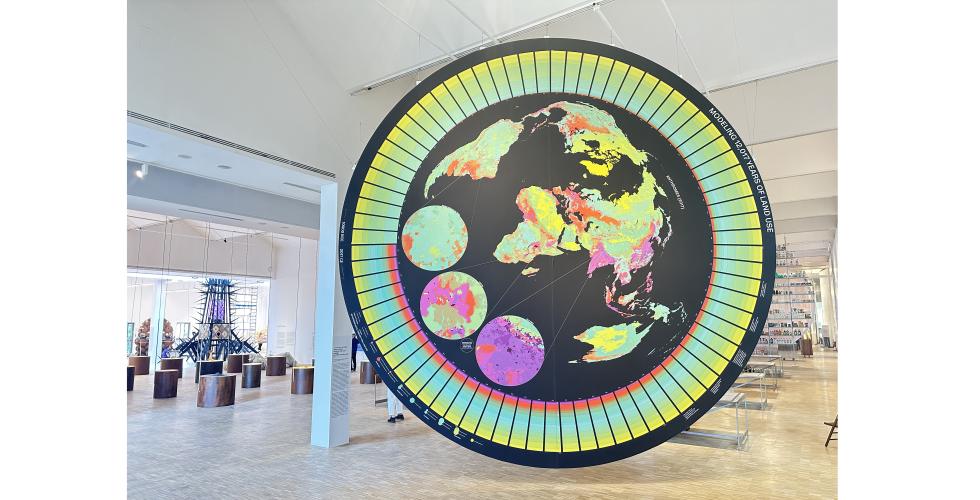
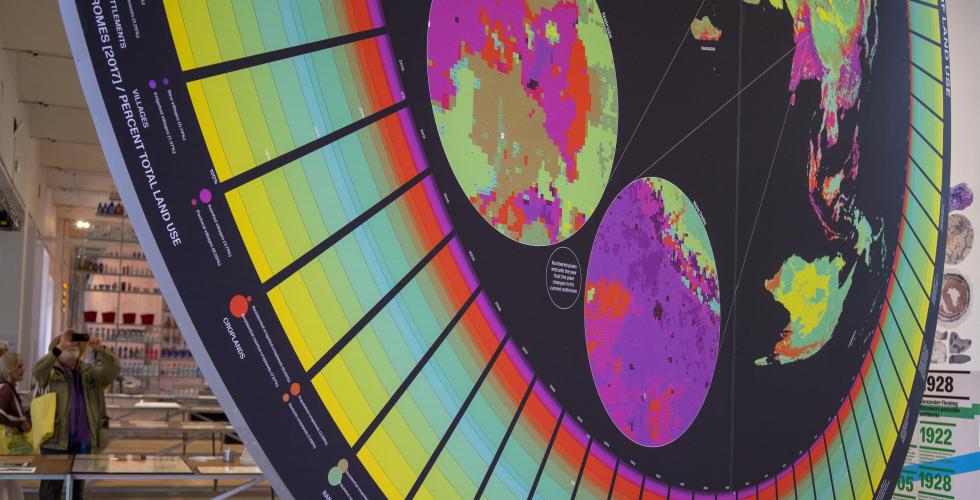
More than 70% of terrestrial nature has been shaped, in very different ways, by people. Anthromes are defined as the ecological patterns shaped by human habitation. Visualized here is the Anthromes Dataset—a “hindcast,” a model built from global population and land use data showing change over 12,017 years. As global population increases and urbanization accelerates, biodiversity shrinks. Preserving both “cultured” and “wild” lands is key to preserving biodiversity.
But something similar has been happening inside the human body. The wilderness within us—our microbiome—has also become markedly more homogenous. This installation draws a parallel between the changing ecology of the Earth and the shrinking diversity of microbial life within human bodies.
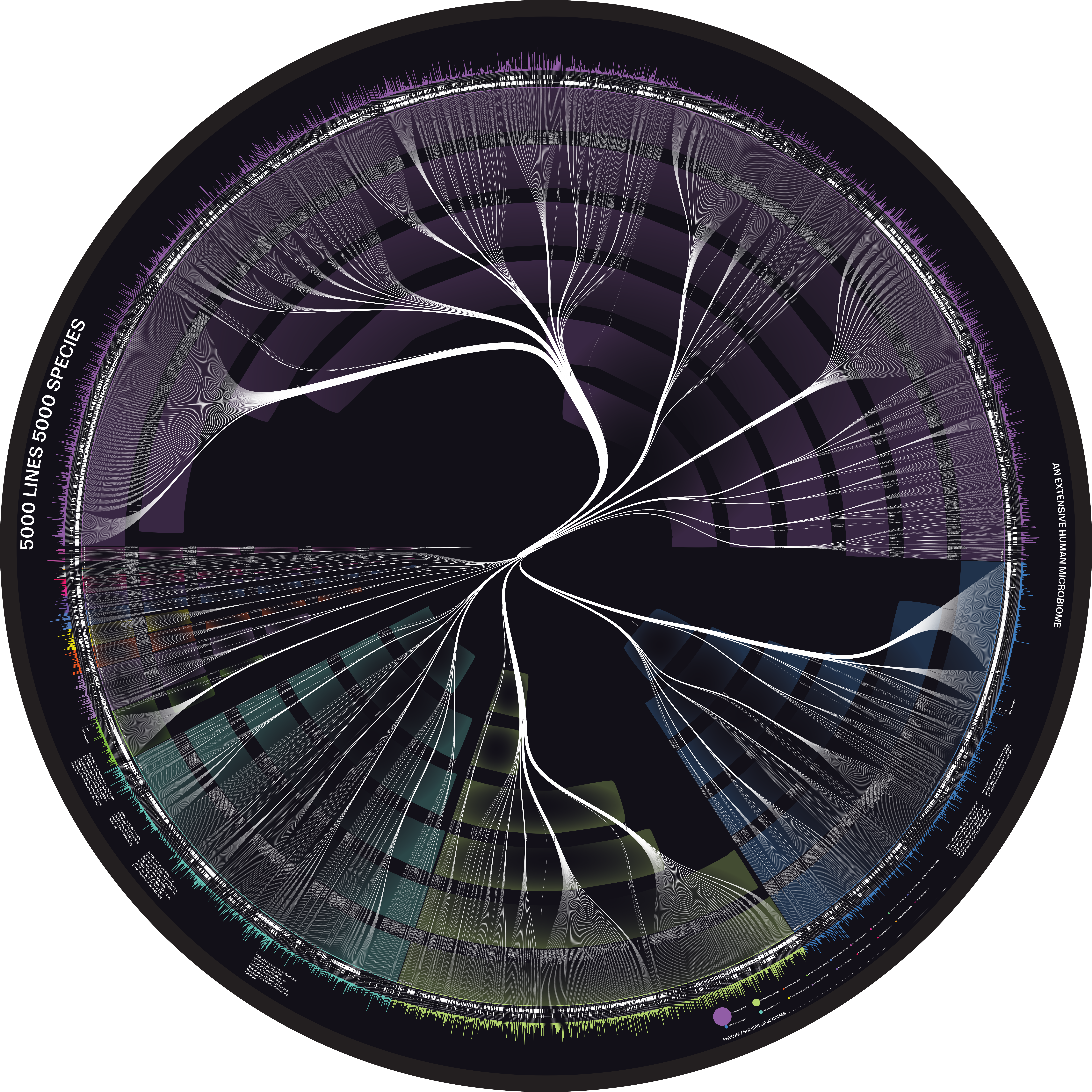
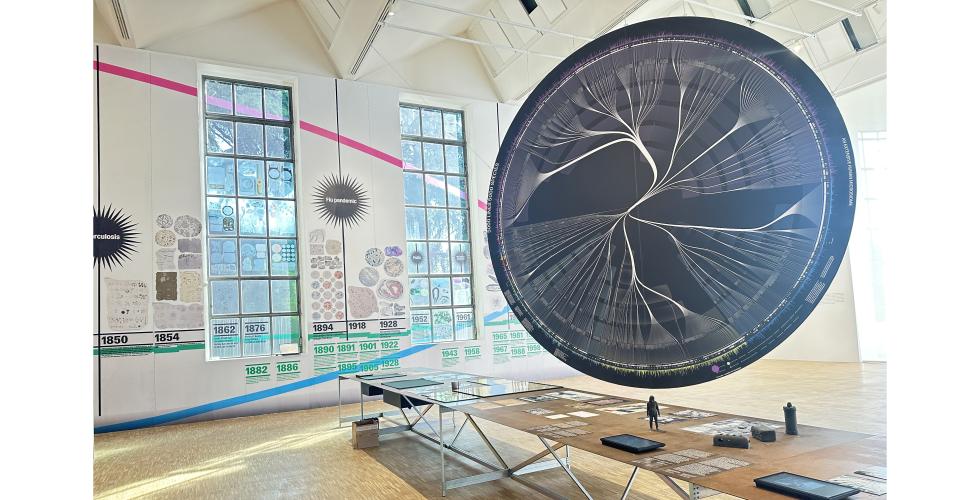
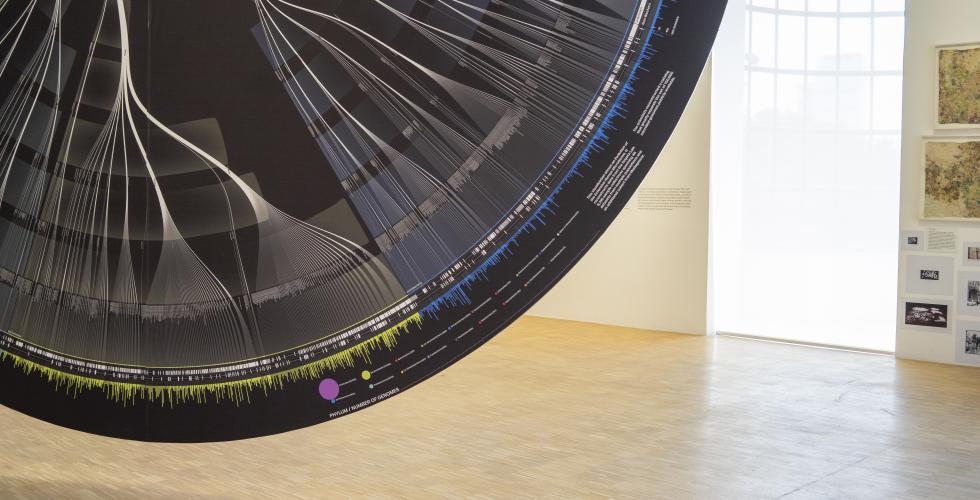
The front of the disk visualizes the largest dataset of human-associated microbes ever assembled. It shows an evolutionary tree comprising more than 150,000 unique genetic sequences, grouped into nearly 5,000 tree elements. At the center of the spiral lies the oldest microbe in the human microbiome, anchoring a complex evolutionary structure. This visualization reconstructs data from the Segata Lab: 9,316 microbial samples across 46 datasets, representing populations from around the world—including a rare cohort from Madagascar. Each line traces the evolutionary path of a Species-Level Genetic Bin (SGB), a unit that groups microbial genomes based on genetic similarity, allowing researchers to identify both known and previously unknown species.
In fact, within this study, 77% of the bacteria species visualized had never been described before. The dataset reveals stark differences in microbiome diversity between Western and non-Western populations. Microbial diversity was highest in indigenous anthromes, leading to renewed calls for their preservation—mirroring the imperative to protect wild ecologies on the planetary scale.
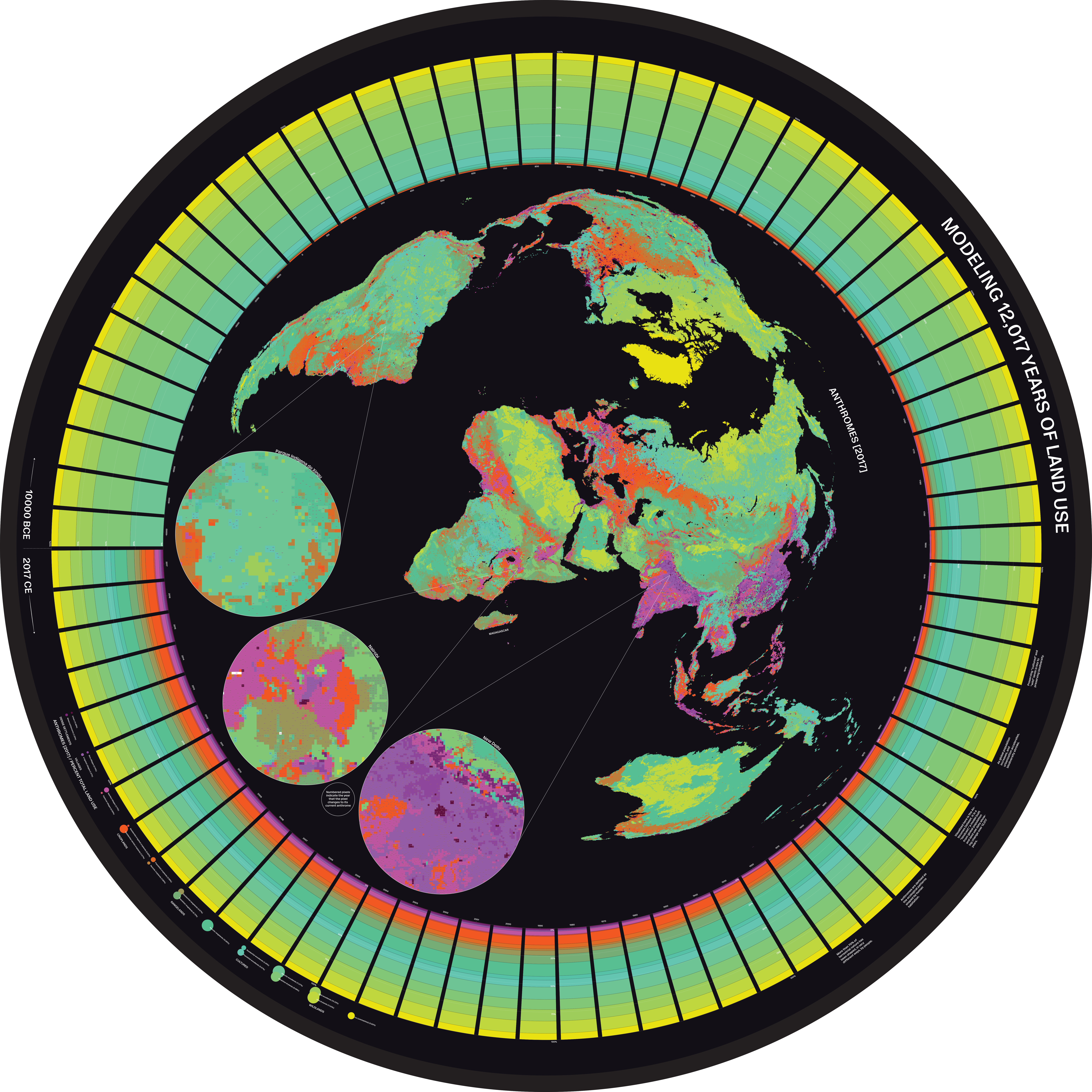
On the back of the disk, the Anthromes Dataset visualizes a model of 12,000 years of human activity. It shows that nearly three-quarters of terrestrial nature has long been shaped by human use. The crisis of biodiversity does not stem from human habitation alone, but from its intensifying appropriation, exploitation, and urbanization. As urbanization accelerates, biodiversity shrinks—within and without.
This double-sided installation positions planetary and microbial ecologies in relation, underscoring the scale of biodiversity loss across domains. Among the 5,000 SGBs, for example, SGB 9243 includes 55 unique genomes, all within the Proteobacteria phylum. These were identified in samples from Madagascar, Fiji, Kazakhstan, and Mongolia—and were previously unknown before this study.
This installation is part of the exhibition We the Bacteria. Notes Toward Biotic Architecture, curated by Beatriz Colomina and Mark Wigley, and presented at the 24th Triennale Milano International Exhibition, where it received the Bee Award for the Best Original Project.